
Short answer: a vehicle-specific hidden dash cam is usually the better fit for programs that prioritize an integrated appearance and defined vehicle applications. A universal dash cam is usually easier to deploy across a broader catalog, but the buyer must accept a more generic installation approach. For B2B sourcing, the correct choice depends on fitment data, program scope, installation method and after-sales responsibility—not resolution alone.
Hidden Dash Cam vs Universal Dash Cam: Quick Comparison
| Decision factor | Vehicle-specific hidden dash cam | Universal dash cam |
|---|---|---|
| Installation appearance | Designed around selected mirror-base, sensor-cover or trim configurations | Uses a general mounting system for wider application coverage |
| Fitment process | Requires vehicle model, year, market and installation photos before confirmation | Requires windshield, power and mounting checks, but usually less housing-specific data |
| Catalog strategy | Best suited to defined vehicle lists and focused applications | Suitable for broader multi-vehicle programs |
| Sampling focus | Housing fit, connector, trim clearance, camera view and functions | Mount security, cable routing, camera view and power compatibility |
| After-sales risk | Wrong application mapping can create fitment claims | Generic installation can create mounting or user-experience questions |
| Typical B2B use | Vehicle-specific aftermarket, dealership accessory and integrated product programs | General retail, fleet trials and broad accessory catalogs |
This comparison covers sourcing logic rather than a single model. Specifications and supported functions vary by product configuration. Buyers should confirm the final vehicle application and feature set before placing a sample or production order.
What Is a Vehicle-Specific Hidden Dash Cam?
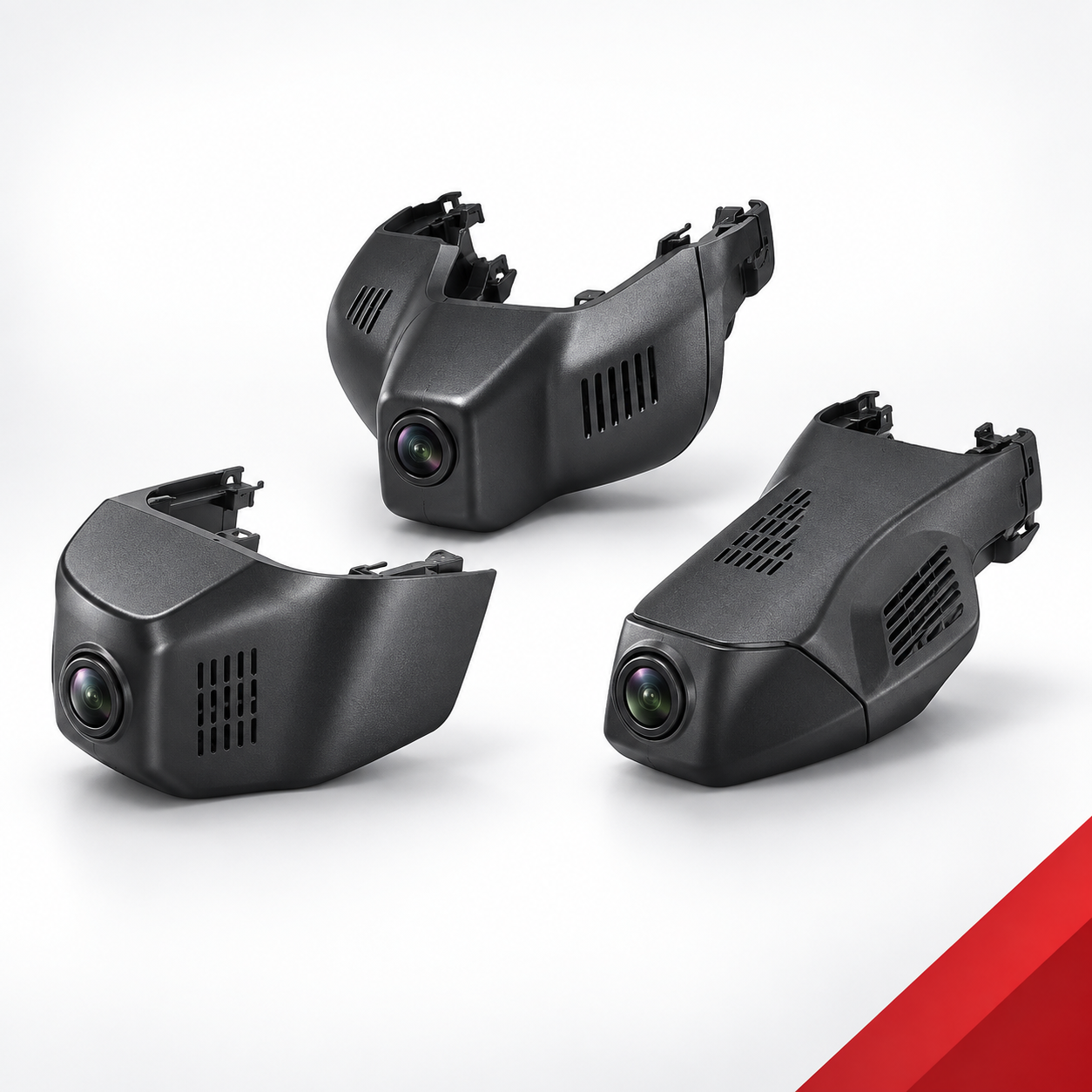
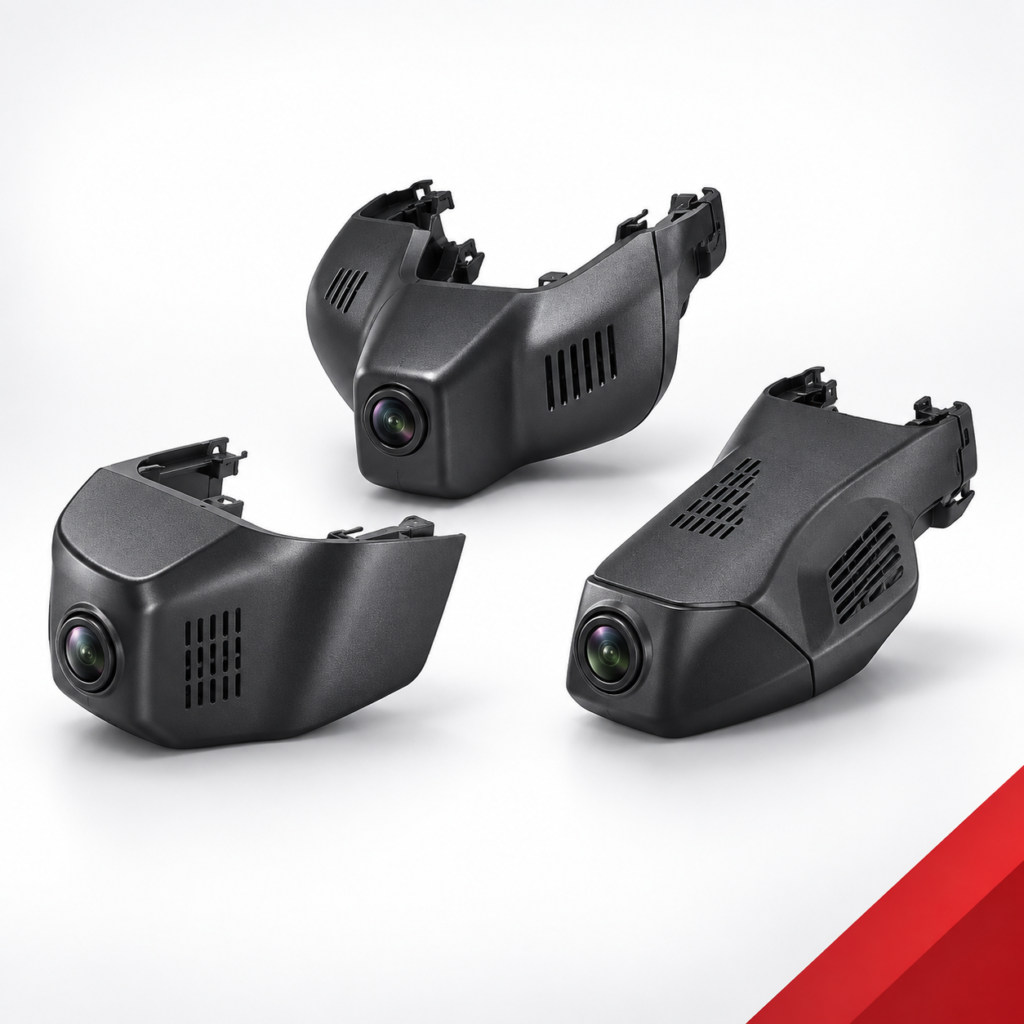
A vehicle-specific hidden dash cam uses a molded housing or integrated cover developed for selected vehicle configurations. The camera may be positioned around the original rearview-mirror base, windshield sensor cover or another defined trim location. The goal is a discreet installation that follows the vehicle interior more closely than a general suction-cup or adhesive-mounted camera.
“Vehicle-specific” does not mean every model from a brand is automatically supported. Mirror bases, sensor packages, connectors and trim shapes can change by model year, sales market and equipment level. Review the vehicle-specific hidden dash camera platform and the broader dash camera sourcing category to see how the product routes are organized.
What Is a Universal Dash Cam?
A universal dash cam is designed to cover many vehicles through a general mounting and power approach. It can be useful when a distributor needs a smaller number of SKUs, serves a mixed vehicle population or wants to test market demand before building a detailed fitment catalog.
Universal does not mean installation-free. Buyers still need to evaluate windshield position, driver visibility, cable routing, power supply, local installation practice and the field of view. A universal product may reduce fitment complexity at the SKU level while shifting more installation decisions to the installer or end user.
B2B Sourcing Differences That Matter
1. Vehicle Fitment and Application Mapping
The main sourcing difference is the amount of application data required. A hidden dash cam program should map the product to a verified vehicle configuration. The buyer should collect the vehicle brand, model, year, sales market, steering position where relevant, and clear photos of the original mirror-base and surrounding trim.
Brand-level statements are not enough. For example, BMW hidden dash camera applications and Chery hidden dash camera applications still require confirmation against the actual vehicle configuration.
2. Installation Experience
A vehicle-specific housing can provide a more integrated appearance when the fitment is correct. The tradeoff is that the installer must receive the correct version. A universal camera offers more mounting flexibility, but the visible mount, cable path and final position depend more heavily on installation quality.
3. SKU and Inventory Planning
Vehicle-specific programs can require multiple housings or application codes. This gives a buyer a more targeted catalog but increases the importance of version control. Universal programs can simplify SKU count, although one product may not deliver the same installation appearance across every vehicle.
4. Feature Confirmation
Resolution and connectivity must be confirmed by version. Options may include front-only or front-and-rear recording, Wi-Fi app access, loop recording, G-sensor functions, GPS, 4G connectivity, ADAS or DMS. These functions are not standard on every hidden or universal model, so the quotation should identify the exact configuration rather than rely on a product-family headline.
5. Packaging, Branding and Documentation
For OEM or private-label discussions, confirm which elements can be customized, the required order quantity, packaging language, installation instructions, included accessories and application list. A vehicle-specific program also needs disciplined fitment documentation so sales and support teams do not promise unsupported vehicles.
Which Option Fits Your Program?
Choose a vehicle-specific hidden dash cam when:
- Your target vehicles are already defined.
- An integrated appearance is a core selling point.
- You can collect installation photos and application data.
- Your sales and support teams can maintain a fitment list.
- You plan to validate samples on representative vehicles.
Choose a universal dash cam when:
- You need broad vehicle coverage with fewer SKUs.
- Your channel already handles general accessory installation.
- You are running an early market or fleet trial.
- A visible general-purpose mount is acceptable.
- You cannot yet maintain a detailed vehicle application database.
Information to Send Before Requesting a Quote
- Target vehicle brands, models, model years and destination markets.
- Photos of the original mirror base, sensor cover and windshield area.
- Required recording channels and resolution options.
- Required Wi-Fi, GPS, 4G, ADAS, DMS or app functions.
- Power, connector or original display information where applicable.
- Target quantity, sample requirement, packaging and branding scope.
For a broader selection workflow, read How to Choose a Vehicle-Specific Dash Camera for OEM and Wholesale Programs.
Sample Evaluation Checklist
- Confirm the housing matches the intended mirror-base or trim configuration.
- Check that installation does not obstruct sensors, controls or the driver’s view.
- Verify the power connection and cable routing for the target vehicle.
- Test camera angle, recorded image coverage and front/rear channel operation.
- Confirm every quoted function on the supplied sample.
- Review app language, packaging, instructions and included accessories.
- Record the exact sample code and approved vehicle application before scaling the order.
Frequently Asked Questions
Is a hidden dash cam compatible with every model in the same brand?
No. Mirror bases, covers, sensors, connectors and trim can vary by model, year and market. Compatibility must be confirmed for the exact application.
Does a universal dash cam eliminate compatibility checks?
No. Universal products still require checks for mounting position, windshield area, power supply, cable routing and field of view.
Is 4K, ADAS, DMS, GPS or 4G standard?
No. These functions depend on the selected product and configuration. The quotation and sample record should state the exact feature set.
Which option is better for a distributor?
A distributor with a defined vehicle list and installation network may benefit from vehicle-specific products. A distributor serving many mixed vehicles with limited fitment data may prefer a universal starting range. Some catalogs use both approaches for different customer groups.
Next Step: Confirm the Program Before Comparing Prices
Price comparisons are meaningful only after the vehicle coverage, housing, recording channels, connectivity functions, accessories, packaging and order scope are aligned. Send the target vehicle details and required configuration for a fitment and sourcing review.